Guitar Life
August 9, 2026 · 7 min read · by Bob Molton
Why the Guitar You Keep Is Never the Expensive One
Your favorite guitar is almost never your most expensive one, and that's not sentimentality talking — it's how attachment actually works. The guitars we keep for decades tend to be the ones that fit our hands without a fight and were present for something real, while the pricier ones often stay pristine because we're too careful with them to really live with them.
Before you shop
Get the free 7-point buyer's checklist
The exact checks I run on every guitar before I buy it. One page, five minutes, no cost.
No spam, no daily blasts. Unsubscribe any time.
Why does the cheap guitar win, every time?
I've had guitars pass through my hands worth more than my first car — real vintage pieces, the kind collectors get quiet around. I've sold every one of them eventually.
The guitar I still own, the one I'd grab first if the house were on fire, is a plain little guitar I bought used for less than the price of a decent amp. It has a chip out of the lower bout from being knocked off a stand in 2003. The finish is worn through to bare wood where my arm rests on it. It is, by any objective measure, not a special instrument.
And I would not trade it for anything currently sitting in my shop.
This isn't just my story. Ask any player who's owned guitars for twenty years which one they'd save first, and it's almost never the fanciest one in the room. There's a reason for that, and it's worth understanding if you're chasing the wrong guitar right now.
I've watched this play out from behind the counter more times than I can count. A customer walks in glowing about a guitar they bought years ago for almost nothing, and it's clearly the instrument of their life. Meanwhile the guitar they're trading in, the one that cost real money, still has the tags practically attached.
Does an expensive guitar actually get played less?
In my experience, yes — and it's almost always because of fear, not laziness.
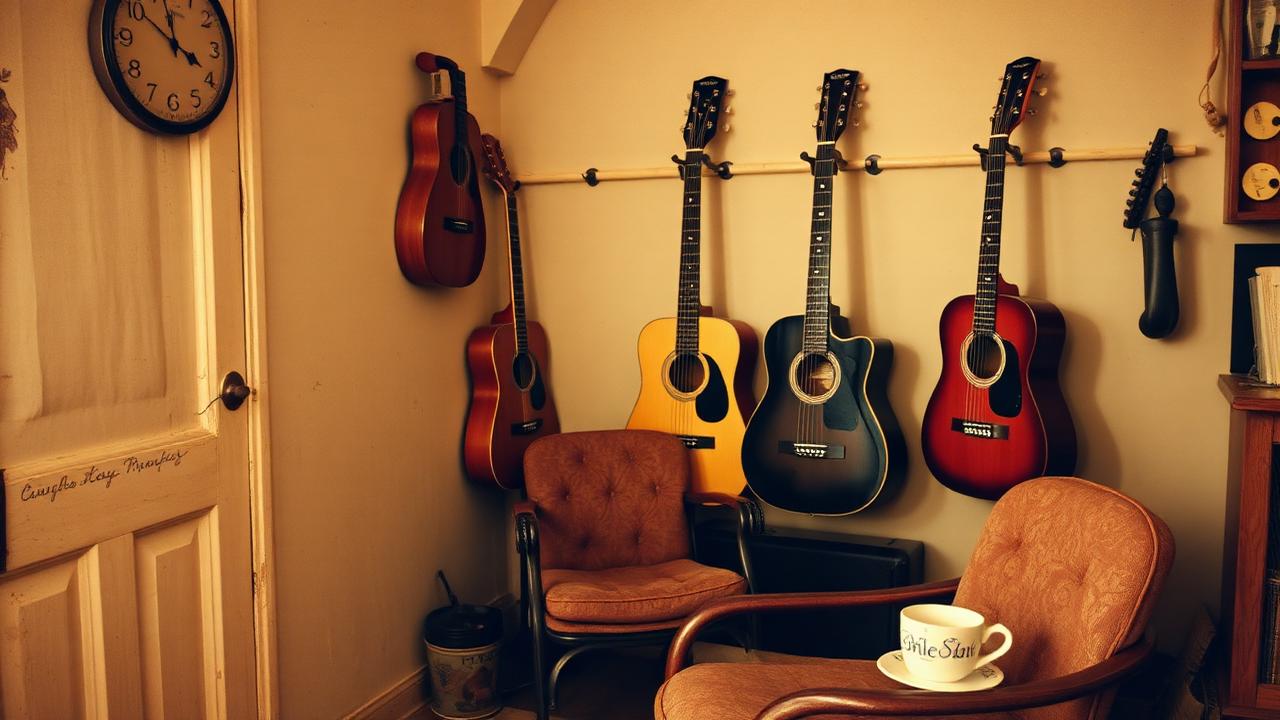
When a guitar costs real money, you start treating it like a museum piece instead of a tool. You worry about the finish. You hesitate to take it to a gig where a stranger's beer could end up near it. You keep it in the case more than out of it, and a guitar in a case doesn't become anyone's favorite.
Meanwhile the cheap guitar goes everywhere. It rides in the back seat. It gets handed to your kid. It goes to the campfire and gets a scratch nobody worries about. Every one of those moments is a small deposit into the account of attachment, and expensive guitars rarely get to make those deposits because we're too protective of them.
The instruments we bond with are the ones we actually live alongside, not the ones we admire from across the room.
I've had customers ask me to insure a guitar before they'll even take it home, which tells you everything about how it's going to be treated for the next decade. That kind of caution is understandable, but it also guarantees the guitar will stay a stranger.
Is comfort really more important than tone or prestige?
For the guitar you'll actually reach for at the end of a long day, yes, comfort wins almost every argument.
A guitar that fits your hands feels like an extension of you within a few weeks. One that doesn't — even if it costs three times as much and sounds gorgeous on a recording — will always feel like a slight negotiation every time you pick it up. Small negotiations, repeated daily, are exactly the kind of friction that quietly ends a habit.
I've watched customers fall in love with the sound of a guitar in the shop, buy it, and then barely touch it at home because the neck profile was subtly wrong for them. Meanwhile their beat-up secondary guitar, the one they didn't think much of, kept getting picked up because it simply felt right in the hand.
Tone matters. Prestige matters to some people. But neither one shows up if the guitar isn't in your hands, and comfort is what decides whose hands it ends up in most often.
What role does history play in a favorite guitar?
A bigger one than people expect. A guitar that was there for something becomes something different than a guitar that was merely purchased.
The guitar I mentioned earlier was there when I wrote the first song I ever played for another person. It was there through three moves and one very bad year. None of that is in the wood, technically — a luthier would tell you it's just spruce and mahogany, same as any other. But it doesn't feel that way when I pick it up, and I don't think that feeling is imaginary.
This is also why a brand-new, objectively better guitar rarely replaces an old favorite outright. The new one hasn't earned anything yet. It might, eventually, if you give it enough years and enough real moments — but that takes time no amount of money can shortcut.
I've had people bring in a guitar that belonged to a parent or a late friend, and I can always tell before they say a word. They hold it differently. That's history doing something no spec sheet ever could.
Can you build that kind of attachment on purpose?
To a point, yes. You can't fake history, but you can put yourself in a position to build it faster.
Take the guitar places. Play it for people, badly if you have to. Let it be the one you grab when a friend asks for a song, not the one you protect for a hypothetical better occasion.
Attachment is really just accumulated use plus a few meaningful moments layered on top. You can't shortcut the moments, but you can absolutely stop delaying the use.
Should that change how you shop for your next guitar?
It should change what you're optimizing for. Stop shopping for the guitar that impresses people in the shop and start shopping for the guitar you'll be careless with in the best possible way.
That means playing it sitting down, for a real ten minutes, not standing at a wall rack for thirty seconds. It means picturing it getting a little scuffed and seeing whether that thought bothers you. If it does, that guitar is destined for the case, no matter how good it sounds today.
It also means being honest that the sticker price on a guitar has almost nothing to do with whether it'll become your favorite. I've seen four-figure guitars gather dust and two-hundred-dollar guitars get played into the ground, lovingly, for a decade.
What if your current favorite isn't your best guitar?
That's completely fine, and more common than not. Keep the one you love in daily rotation and let the fancier ones do what they're actually good at — recording sessions, special gigs, moments where their particular voice matters.
There's no rule that says your best-sounding guitar has to be your most-played one. Plenty of working musicians have a beloved beater for everyday use and a nicer instrument that comes out for specific occasions. Both jobs matter. They're just different jobs.
How do you know when a new guitar might actually become the favorite?
Give it real time before you decide. Attachment isn't instant — it builds through repetition, not through a good first impression in a shop.
Watch for the moment you stop thinking about the guitar and start just playing through it. That's usually around the three-to-six month mark for most people, if the guitar fits your hands to begin with. If you're still negotiating with it after six months, it probably never fit right, no matter what it cost.
And don't feel bad if your true favorite turns out to be the cheap one in the corner. Some of the best players I know feel exactly the same way about theirs.
Does this mean expensive guitars are a bad purchase?
Not at all — it just means you should be honest with yourself about what role that guitar is going to play in your life before you buy it.
A pricier instrument makes complete sense if you want a specific tone for recording, or if you're a working musician who needs a guitar that performs a job your everyday guitar can't. That's a real purpose, not vanity.
The mistake isn't spending money. It's expecting the price tag itself to manufacture the kind of bond that only comes from actually living with an instrument, scuffs and all.
FAQ
Questions people ask me
Keep in touch
One useful guitar email at a time
Join the list and I'll send the free checklist now, plus new tools and posts as they land.
No spam, no daily blasts. Unsubscribe any time.
Keep reading
Where to go next
- Lessons with Bob
One-to-one lessons built around the guitar you actually love playing.
- Buying, selling and trading guides
How to know what a guitar is really worth before you sell or trade it.
- Run the Guitar Matcher
Find a guitar built to fit your hands, not just your wish list.