Guitar Life
August 22, 2026 · 7 min read · by Bob Molton
How Many Guitars Do You Actually Need?
How many guitars you need depends on how many different jobs you're asking a guitar to do — not on how many you can afford. Most players are genuinely well served by two or three: one for everyday practice, one for the sound they love most, and maybe one specialty instrument. Everything past that is a hobby of its own, which is fine, as long as you're honest about which hobby you're in.
Before you shop
Get the free 7-point buyer's checklist
The exact checks I run on every guitar before I buy it. One page, five minutes, no cost.
No spam, no daily blasts. Unsubscribe any time.
Why do guitar players end up with so many guitars?
I want to be upfront about something before I answer this question: I am not a neutral party. I have bought and sold hundreds of guitars over the years, and at various points I have personally owned more than a dozen at once. So when I tell you "two or three is usually plenty," understand that I'm telling on myself a little.
The truth is that guitars are seductive in a way that most tools aren't. A hammer doesn't have a personality. A guitar does. Each one has its own voice, its own weight in your hands, its own smell when you open the case. Once you've felt that a few times, it's very easy to convince yourself that guitar number seven is the one that will finally unlock something in you.
Sometimes it is. Usually it isn't. Usually it's just guitar number seven.
So let's separate the real reasons to own more than one guitar from the reasons that are really just an itch dressed up as logic.
What's the minimum number of guitars that actually makes sense?
One guitar is enough to learn on, enough to gig on, and enough to fall in love with music for the rest of your life. Plenty of the best players I know play one guitar almost exclusively and own two or three others purely out of habit.
But if you're asking what I'd consider the sweet spot for someone who's serious about playing, it's two: an acoustic and an electric. They pull different muscles, they suit different rooms and different moods, and having both means you're never stuck without the right tool for whatever you're feeling that night.
A third guitar earns its keep when it does something genuinely different from the first two — a baritone for a lower tuning, a resonator for slide, a nylon-string for fingerstyle. Not a third dreadnought in a slightly different shade of sunburst.
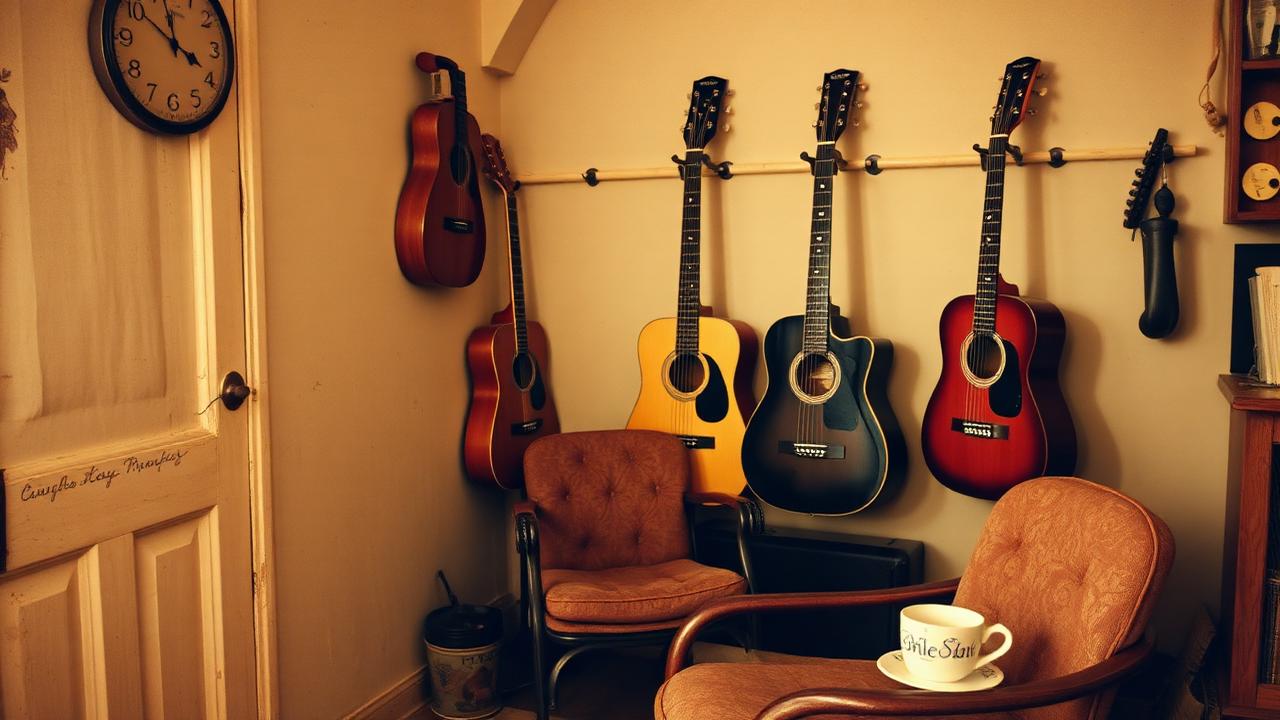
Past three, you're no longer solving a musical problem. You're collecting. And collecting is a perfectly good hobby, but it's a different hobby than playing.
How do you tell a real gap from just wanting a new guitar?
Here's the test I use on myself, and the one I give students who ask whether they should buy guitar number four.
Ask what you can't currently do. Not what would be nice to have — what you are physically unable to accomplish with what's already on your wall. If you own a Strat and a dreadnought and you're craving a way to get a warmer, rounder electric tone for jazz voicings, that's a real gap. A humbucker guitar solves a problem your current guitars can't.
If instead you're eyeing a guitar that's basically the same as one you own, in a nicer finish or a more famous brand, that's not a gap. That's a want, and wants are fine to indulge occasionally, but don't dress them up as need.
I ask myself one more question that keeps me honest: which guitar in my current stack am I neglecting? If I can't answer that instantly, I don't need another one. I need to go play the ones I have.
What does an unplayed guitar actually cost you?
It's not just the money sitting in the case, though that matters. It's the guitar's condition.
Guitars that don't get played don't get noticed. Strings go dead and nobody hears it happen gradually. Necks shift with the seasons and nobody catches it until the action's crept up half an inch. Cases in closets get humidity swings that a guitar in daily use would never see, because you'd feel the difference and fix it.
I've bought guitars back from people that they hadn't touched in three years, and it's always sadder than it should be — a genuinely good instrument that just sat there, dry and out of tune, doing nothing for anyone. A guitar's job is to be played. One that isn't being played isn't really serving its owner; it's just occupying a stand.
So part of the real answer to "how many guitars do you need" is "as many as you can keep in regular rotation, honestly." For most people with jobs, families, and one practice session a day if they're lucky, that number is small.
Is it ever worth owning more guitars than you can play at once?
Yes — for specific reasons, and I'll name three that hold up.
The first is tuning. If you regularly play in standard, drop D, and open G, having a guitar set up for each tuning saves you from constantly retuning and drifting your intonation. That's a working musician's reason, not a vanity reason.
The second is backup. If you gig, a second guitar that lives in the car isn't excess — it's insurance against a broken string mid-set. The third is teaching or lending: if you have students, kids, or a spouse who's starting to learn, an extra guitar sitting ready for someone else's hands earns its keep completely differently than one sitting ready for yours.
None of those are about the guitar itself being special. They're about a job that needs doing. That distinction is the whole answer, really.
What should you do with the guitars you're not playing?
Sell or trade the ones that aren't earning a place in your rotation. I know that sounds harsh coming from a guy whose whole career is guitars, but I mean it kindly.
A guitar sitting in a case is worth exactly what someone will pay for it today. A guitar sitting in a case for another five years is worth less, because guitars depreciate faster asleep than awake — cases fail, cases get bumped, finishes check, hardware corrodes. Selling it now, while it's healthy, funds either your next real gap or just gives you back space and cash.
If you're not sure what something's worth or how to move it without getting lowballed, that's exactly what the buying and selling guides are for. I wrote them because I've made every mistake in that process myself, more than once.
So what's the honest number?
For most players: two to three, chosen for genuinely different jobs, kept in daily reach, kept in tune.
For gigging musicians: however many distinct tunings and backup needs your gig calendar actually creates, no more.
For collectors: as many as you love and can actually care for — just call it what it is, and don't let it quietly starve your playing time.
The number was never really the point. The point is whether the guitars you own are getting picked up. A single guitar that gets played every day beats a wall of guitars that don't, every single time.
FAQ
Questions people ask me
Keep in touch
One useful guitar email at a time
Join the list and I'll send the free checklist now, plus new tools and posts as they land.
No spam, no daily blasts. Unsubscribe any time.
Keep reading
Where to go next
- Buying, selling and trading guides
How to value a guitar honestly and sell it without getting lowballed.
- Run the Guitar Matcher
Find out whether your next guitar fills a real gap or just looks nice.
- Lessons with Bob
One-to-one lessons focused on playing what you already own, well.